

 Democratic Republic of the Congo
The Democratic Republic of the Congo (DRC) joined the CQUIN learning network in September 2019. DRC 2024 UNAIDS estimates that 610,000 [500,000-750,000] adults and children living with HIV, and an HIV prevalence of 0.7% in adults aged 15-49 [0.9% in women and 0.5% in men]. An estimated 77% of people know their HIV status and 71% of people who know their status are on treatment.
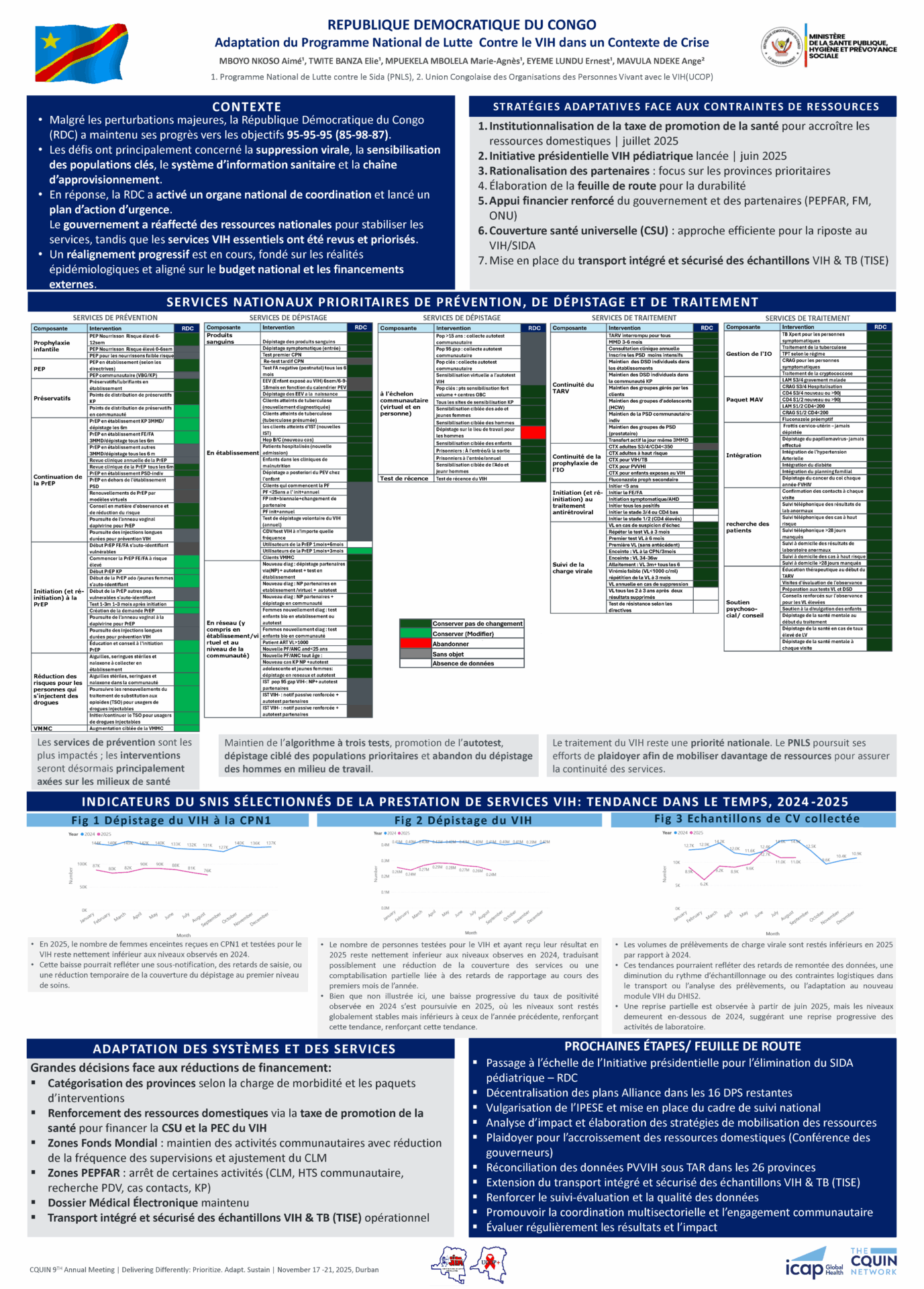
In 2025, DRC participated in CQUIN-supported HIV service prioritization assessments to support the sustainability of HIV programs amid a changing global funding landscape.
The resources on this page reflect the most recent updates.
The Democratic Republic of the Congo (DRC) joined the CQUIN learning network in September 2019. DRC’s Ministry of Health and the National AIDS Control Program are committed to advancing the implementation of differentiated service delivery (DSD) models and are energized at the prospect of presenting more diverse options to recipients of care.
In two provinces in DRC, three differentiated antiretroviral (ART) delivery models were introduced and offered to recipients of care:
- One facility-based group model: ART clubs provide refills via support groups managed by health care workers.
- One facility-based individual model: Fast-track ART refills.
- One community-based individual model: community-based points of ART distribution
- One community-based group model: community ART groups.
Though progress has been made in increasing retention and reducing wait time for recipients of care at the community-level, challenges remain.

Visit ICAP's Website for a broader portfolio of work in CQUIN network countries.