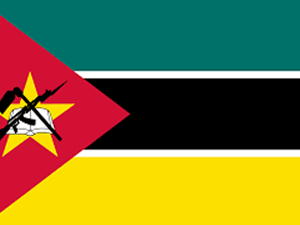
 Mozambique
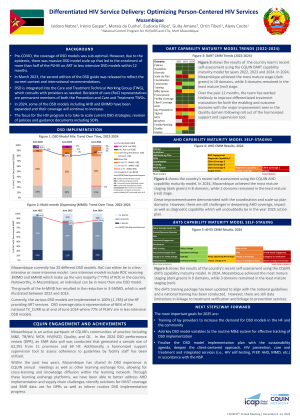
Mozambique has been a member of the CQUIN learning network since 2017. Since joining the network, the country has rolled out multiple initiatives to improve the quality of HIV services in the country.
In September 2019, Mozambique’s Ministry of Health (MOH) rolled out new monitoring and evaluation (M&E) tools to accelerate collection of DSD information, using a master-card and electronic patient tracking system to collect DSD-specific data at the patient level. Additionally, Mozambique’s MOH created definitions for quality standards for less-intensive DSD models and developed a supervision form to evaluate the quality of DSD services including assessment of eligibility, prophylaxis, lab tests, clinical appointments, and drug pickups.
Currently, ten models of antiretroviral (ART) services are available in Mozambique—six less-intensive DSD models and four more-intensive models, including the conventional model and one-stop-shops for antenatal care, services for the prevention of mother to child transmission, as well as TB/HIV and youth-friendly adolescent services. The six less-intensive models include:
- Two facility-based individual models: three-month multi-month scripting (MMS); and the appointment spacing model.
- One facility-based group model: adherence clubs.
- One community-based individual model: integrated mobile brigades with community ART refills.
- Two community-based group models: community support and adherence groups; and the family group model.
Community engagement and quality improvement (QI) are central to Mozambique’s DSD priorities. In 2017, a CQUIN-supported south-to-south learning exchange led a team from Mozambique to observe Malawi’s teen clubs, resulting in the addition of teen clubs for ART refills to Mozambique’s national DSD guidelines. Mozambique’s MOH developed a QI framework to enhance the quality of HIV services, including DSD, based on assessment of clinical performance standards and the development of improvement plans for weak performance areas. The framework has guided health managers and providers in the implementation of a standardized approach to QI and has enabled health facilities to implement different QI-DSD activities. Mozambique has actively participated in the CoP, and contributed to the co-creation of CQUIN’s DSD quality framework.
Mozambique is also a member of CQUIN’s virtual monitoring and evaluation (M&E) community of practice, a forum where experts share resources, tools, and best practices to enhance national M&E programs for DSD.
As Mozambique continues to improve and diversify DSD models, MOH focus remains on demand creation and effective community engagement strategies to ensure all eligible recipients of care have the option to enroll in the model of their choice. Moving forward, increasing the diversity of models and improving quality standards are central to this goal.
Mozambique has been a member of the CQUIN learning network since 2017. Since joining the network, the country has rolled out multiple initiatives to improve the quality of HIV services.
UNAIDS 2024 estimates show that Mozambique has 2,500,000 [2,300,000-2,700,000] adults and children living with HIV, and an HIV prevalence of 11.5% in adults aged 15-49 [14.5% in women and 8.2% in men]. An estimated 87% of people know their HIV status, 82% of people who know their status are on treatment, and 75% of those on treatment are virally suppressed.

Visit ICAP's Website for a broader portfolio of work in CQUIN network countries.