Mozambique, a committed member of the CQUIN network since 2017, has made tremendous progress towards HIV epidemic control. However, a stop-work order (SWO) on U.S. government-funded HIV programming in early 2025 put significant pressure on the country’s health system.
According to the Ministry of Health, the impact was sudden and widespread.
“The USG SWO has had a substantial and immediate impact on Mozambique’s HIV service delivery, particularly in areas where community engagement, case management, and decentralized service models were key,” said Dr. Irénio Gaspar, Care and Treatment Lead at Mozambique’s Ministry of Health.
According to Dr. Gaspar, the challenges have increased the burden on facility-based services. The combined effect has been a reduction in several services, including testing and new antiretroviral therapy (ART) initiations, as well as a decline in pre-exposure prophylaxis (PrEP) uptake, among other constraints, reversing previous gains made in treatment scale-up.
Despite the setbacks, Mozambique is resolved to maintain essential HIV treatment and prevention services, and CQUIN is supporting Mozambique’s efforts.
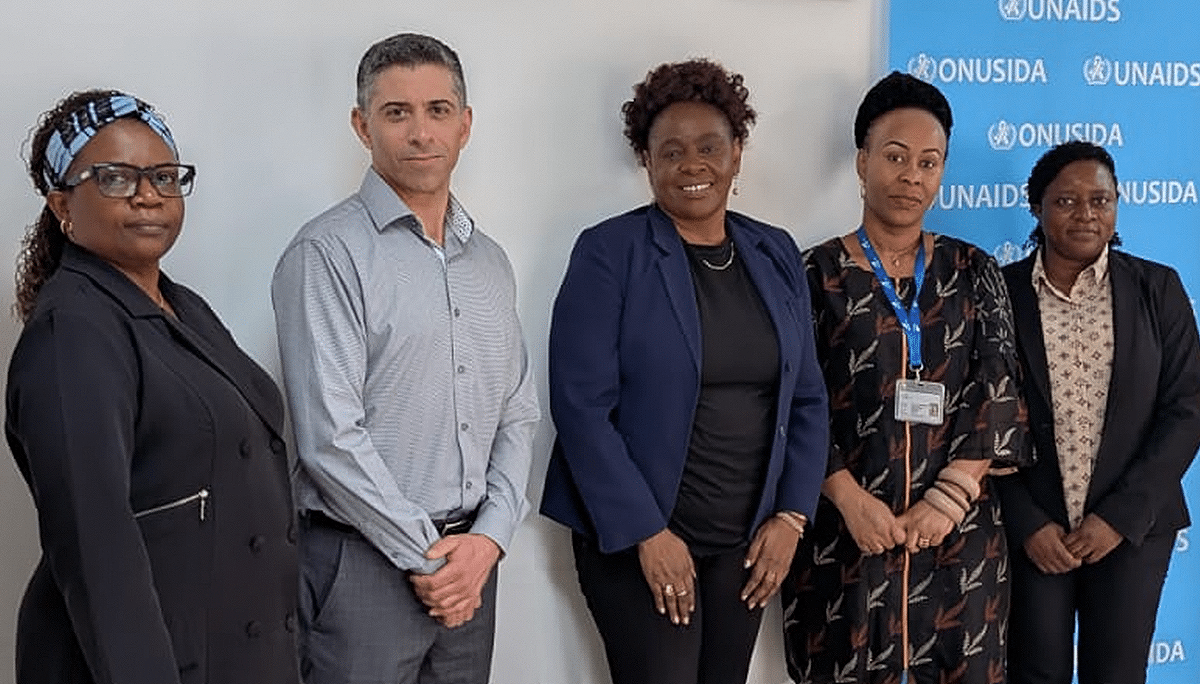
From April 27 to May 1, 2025, the Mozambique Ministry of Health hosted a joint delegation from the ICAP-led CQUIN, the HIV Impact Network for Vertical Transmission Elimination (HIVE) teams, as well as the Gates Foundation for a country engagement visit. The visit provided an opportunity for the ICAP delegation to meet the Ministry of Health and its partners to assess the impact of ongoing funding challenges and identify sustainable solutions to protect the country’s HIV response. The five-day visit included several meetings with stakeholders, implementing partners, and supply chain organizations engaged in the HIV response, such as Village Reach, UNAIDS, ARC, and Chemonics.
The key objectives of the visit were to explore potential areas for CQUIN support that would enable Mozambique to adapt its services, gather input on existing collaborations, and review collaborations among other stakeholders in the HIV response and the Ministry of Health. The HIVE team also assessed the status of vertical transmission prevention services to identify challenges and develop strategies to sustain service delivery. CQUIN was also interested in gauging areas of technical assistance support, such as providing guidelines for monitoring and evaluation.
“What stood out during our visit was the resilience and ingenuity of the Mozambican Ministry of Health and partners. They’re not just reacting to challenges—they’re redefining what a sustainable, country-led HIV response looks like,” said Dr. Rachel Mudekereza, CQUIN’s senior regional clinical advisor.
The Ministry of Health highlighted ongoing efforts to respond to the stop-work order at every level of the HIV health system. At one meeting, UNAIDS noted that, while Mozambique contributes significantly to its broader health sector, less than five percent of its HIV funding comes from internal sources; up until February 2025, more than 80 percent of the HIV response in Mozambique was funded through a combination of PEPFAR and Global Fund donations, emphasizing the need for a costed sustainability roadmap.
“The gains we built over the years relied heavily on the stability and predictability of funding streams, particularly from the US Government through PEPFAR,” said Dr. Gaspar.
According to him, before the SWO, more than two million people living with HIV in Mozambique were receiving antiretroviral therapy (ART), supported by differentiated service delivery (DSD) models such as multi-month dispensing (MMD), community ART distribution, and integrated facility-based care for recipients of care with tuberculosis or maternal and child health services. These achievements, according to the Ministry, were the result of years of investment in human resources, community-led programming, and functional data systems. Now, the country has to recalibrate its approach.
“Every stakeholder we met—government, implementing partners, donors—acknowledged the urgency of improving data systems. The integration of HIV M&E systems with national M&E systems is essential if we want to navigate this next phase successfully,” said Marline Jumbe, CQUIN’s regional strategic information advisor.
CQUIN is now working closely with the Ministry of Health and national stakeholders to prioritize the next steps. Priority actions for CQUIN include providing technical assistance to the MOH to strengthen the integration of HIV services with other services, such as family planning, introducing AI-based solutions, including predictive analytics for identifying people at risk for advanced HIV disease, and enhancing supply chain forecasting.
“The ICAP joint visit was extremely valuable and timely. It allowed us to advocate for strategic support from other partners, including the Gates Foundation and Global Fund,” said Dr. Gaspar. “Discussions are ongoing and aim to ensure that any support complements existing investments and addresses the most urgent service delivery gaps resulting from recent funding disruptions. We are also looking for continued and expanded support from ICAP.”