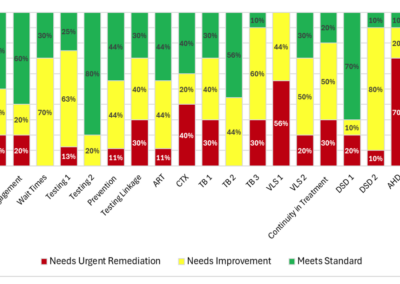
In collaboration with the South African National Department of Health, ICAP convened country teams to collectively address gaps, prioritize, adapt, and sustain HIV services amid a changing funding landscape at the CQUIN 9th Annual Meeting.
From November 17 to 21, 2025, representatives from the 21-country network, including ministries of health, national networks of people living with HIV, donors, implementing partners, civil society, and global partners, met to build on conversations around the shifting HIV funding landscape and results from country-led HIV self-assessments introduced at the June Strategic Planning Meeting.
“Countries are experiencing severe changes to their external funding for their national HIV programs, and their responses have varied significantly, as we have seen in the presentations at this meeting,” said Jessica Justman, MD, principal investigator for the CQUIN network and senior technical director at ICAP.
“The June meeting quickly brought countries in the network together to mobilize around the prioritization of HIV services; this exercise proved critical in informing the processes taking place at country level,” said Tendai Nyagura, MBChB, MPH, senior program officer with the Gates Foundation. “The CQUIN 2.0 pivot demonstrated foresight and positioned the network and its members well for the current context,” she said.
From plenary discussions on the state of the global HIV response, financing the future of HIV, strengthening systems, and transforming donor-dependent systems into efficient, country-led HIV programs, each session was designed to engage participants, draw out shared challenges, and help countries extrapolate practical lessons to take home to advance their national HIV responses for 2026.
Countries also shared updates on HIV service priorities underway through parallel and poster sessions, offering a high-level view of how the past year has reshaped program priorities.
To maintain focus on network priorities in the changing funding landscape, CQUIN community of practice sessions covered key focus areas, including integration, community engagement, key populations, prevention, and monitoring and evaluation. The objectives of these communities of practice have also evolved to reflect the current country prioritization and implementation context. The next generation of the HIV response was highlighted, with a keynote by Elaine Abrams, principal investigator of the HIV Impact Network for Vertical Transmission Elimination (HIVE), on prioritizing prevention of vertical transmission in constrained funding environments.
There were also interactive tabletop discussions to brainstorm challenges and opportunities on national system and service-level planning, alongside thematic parallel sessions on funding restrictions, advanced HIV disease (AHD), and innovative digital solutions.
The final keynote of the meeting focused on community engagement and maintaining access to services for vulnerable populations. Deo Mutumbuka, executive director of the Rwanda Network of People Living with HIV (RRP+), reminded participants that each HIV service priority plan and decision must involve perspectives from the recipient-of-care community.
-
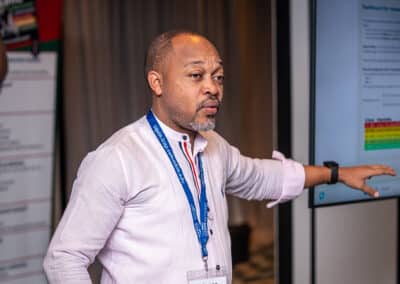
Moses Luwunzu, M&E Program Officer at the Uganda Ministry of Health showing participants Uganda's automated integration tool
-
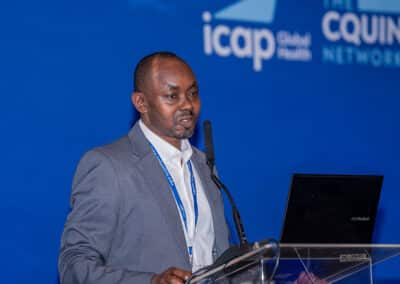
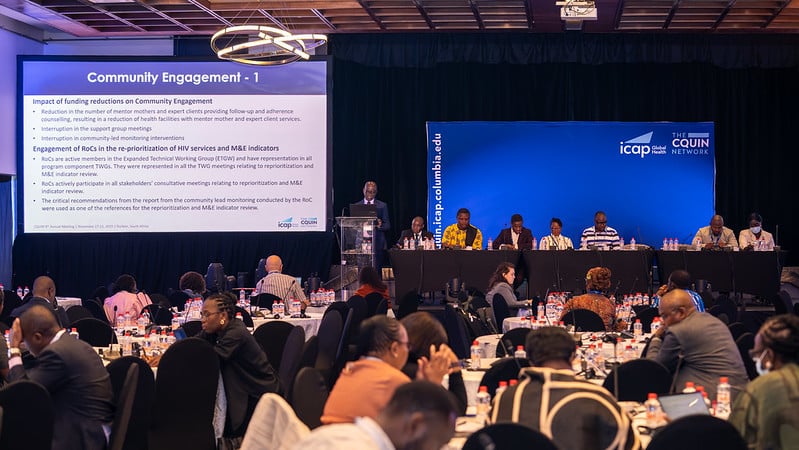
Deo Mutumbuka, Executive Director of the Rwanda Network of People Living with HIV (RRP+) giving his keynote address
-

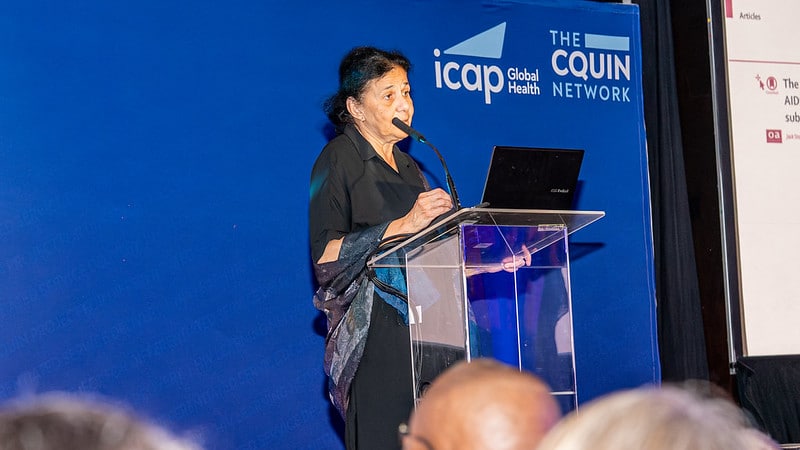
Dr. Wafaa El-Sadr, ICAP's Global Director at the opening of the meeting giving a presentation on the state of the global HIV response.
-
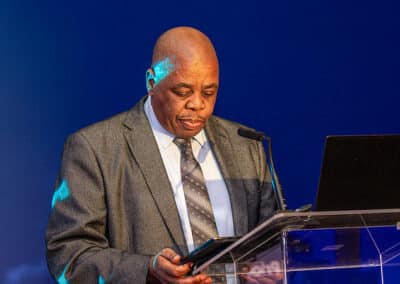
Dr. Sandile Buthelezi, Director General of South Africa's National Department of Health at the meeting opening dinner.
-
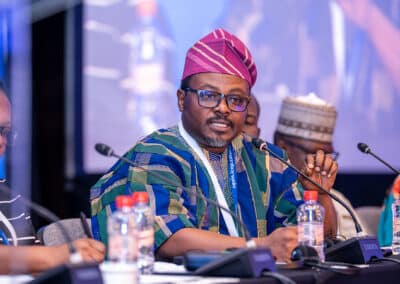
Dr. Emmanuel Teviu, Ghana's National AIDS/STI Control Program Manager, during one of the sessions
-

Participants during the poster session at the meeting
-
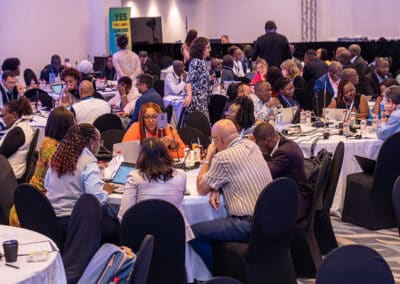
Tabletop discussions at the annual meeting
-

Dr. Ruben Sahabo, ICAP in Eswatini Country Director engaging other participants in a session
-
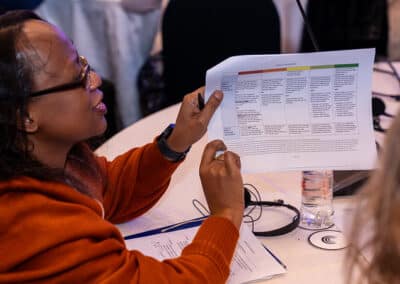
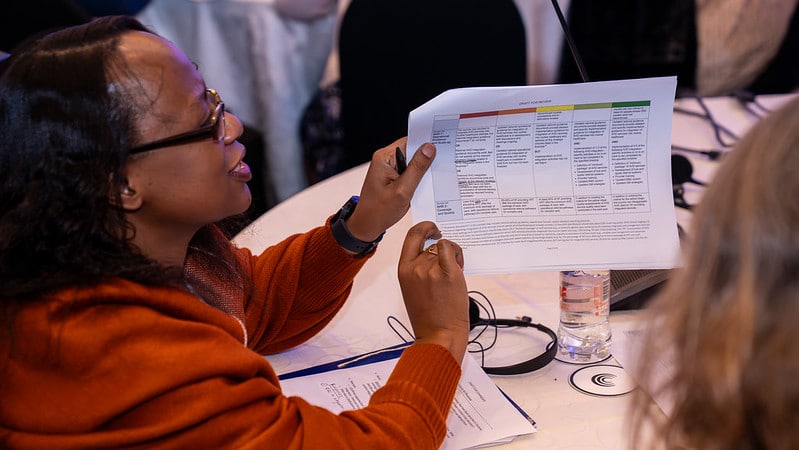
Dr. Maureen Syowai, CQUIN Program Director engaged in a conversation about draft self-assessment criteria for integrated models of care
-

Idrissa Songo, Executive Director for NETHIPS, giving a presentation on community-led antiretroviral therapy delivery.




On reflection, participants felt the meeting had strengthened their ability to respond to the current moment.
“CQUIN has been an excellent learning platform,” said Emmanuel Teviu, MBChB, MPH, program manager for Ghana’s National AIDS/STI Control Program. “If we are to adapt and achieve a sustainable HIV response, as this year’s meeting theme suggests, we must pursue integration, particularly at the primary health care level. We are leaving this meeting with valuable lessons.”
“What we are focusing on most for the coming year is the implementation of an integration model, which will allow us to optimize human resources for the sustainability of our HIV program,” said Daniel Kone Zana, MD, chief medical officer with Côte d’Ivoire’s National AIDS Control Program.
“One thing I’ve really taken from this meeting,” said Rhoda Coffie, BA, national secretary for the National Network of People Living with HIV in Ghana, “is that community is the center and the driver of everything. Without us, programs can’t function properly. For programs to be successful, we need real community engagement.”
With funding changes ongoing, CQUIN’s mission remains the same: convening country teams and offering technical support in response to country-identified needs to help sustain HIV programs. “The network is positioned to help the countries learn from one another through formal convenings, but also through informal exchanges and ongoing communication between events,” said Maureen Syowai, MBChB, MSc, CQUIN/HIVE program director.
Looking ahead, CQUIN will review country action plans submitted at the annual meeting to identify priority areas for upcoming webinars, learning exchanges, and other future convenings.