Countries in the CQUIN network have built robust monitoring and evaluation (M&E) systems to document and report on a wide range of health services across all levels of their national health systems. These systems are complex and vary widely within and across countries, with real-time data monitoring supported by various sources, including external global funding.
As U.S. support for HIV programs declines, countries are increasingly expected to strengthen domestic investment and assume greater ownership of their M&E programs.
To help countries navigate this shift, CQUIN has developed a new resource: the National M&E System Vulnerabilities Assessment Tool.
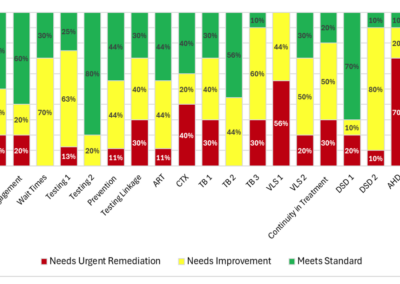
The tool – a questionnaire with a color-coded scoring system – allows countries to see at a glance which components of their M&E programs are currently supported by external donors and partners. For example, one set of questions assesses whether systems exist to routinely check, validate, and improve data quality.
“This assessment is increasingly important to do as funding landscapes shift,” said Bill Reidy, PhD, MPH, CQUIN deputy director for strategic information. “We hope that more granular information about M&E system vulnerabilities will help countries prioritize activities and allocate funding to support data collection, use, and quality.”
By helping countries systematically identify which components of their M&E systems are externally supported, the tool provides a structured basis for prioritizing domestic investment and strengthening long-term sustainability.
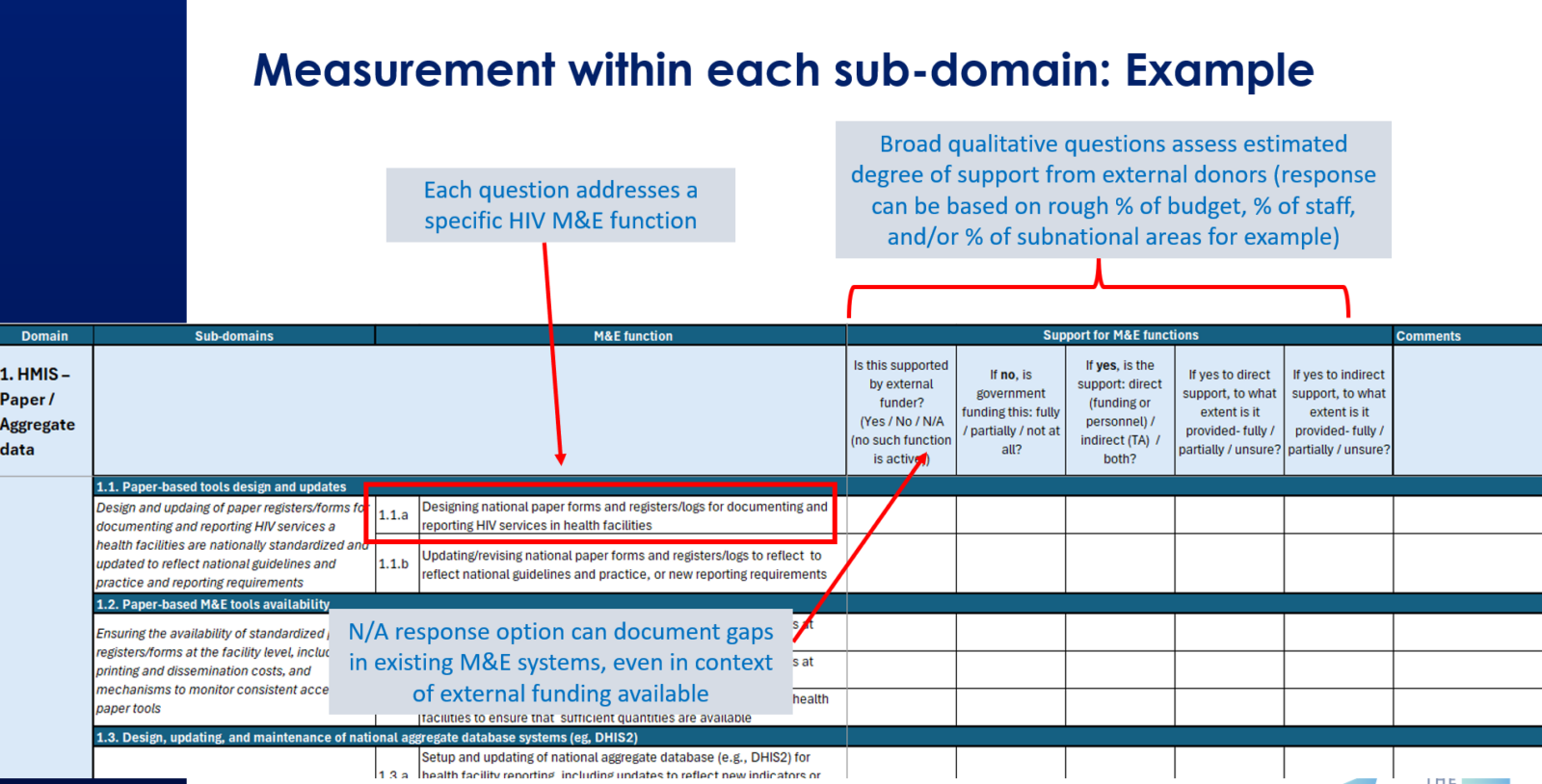
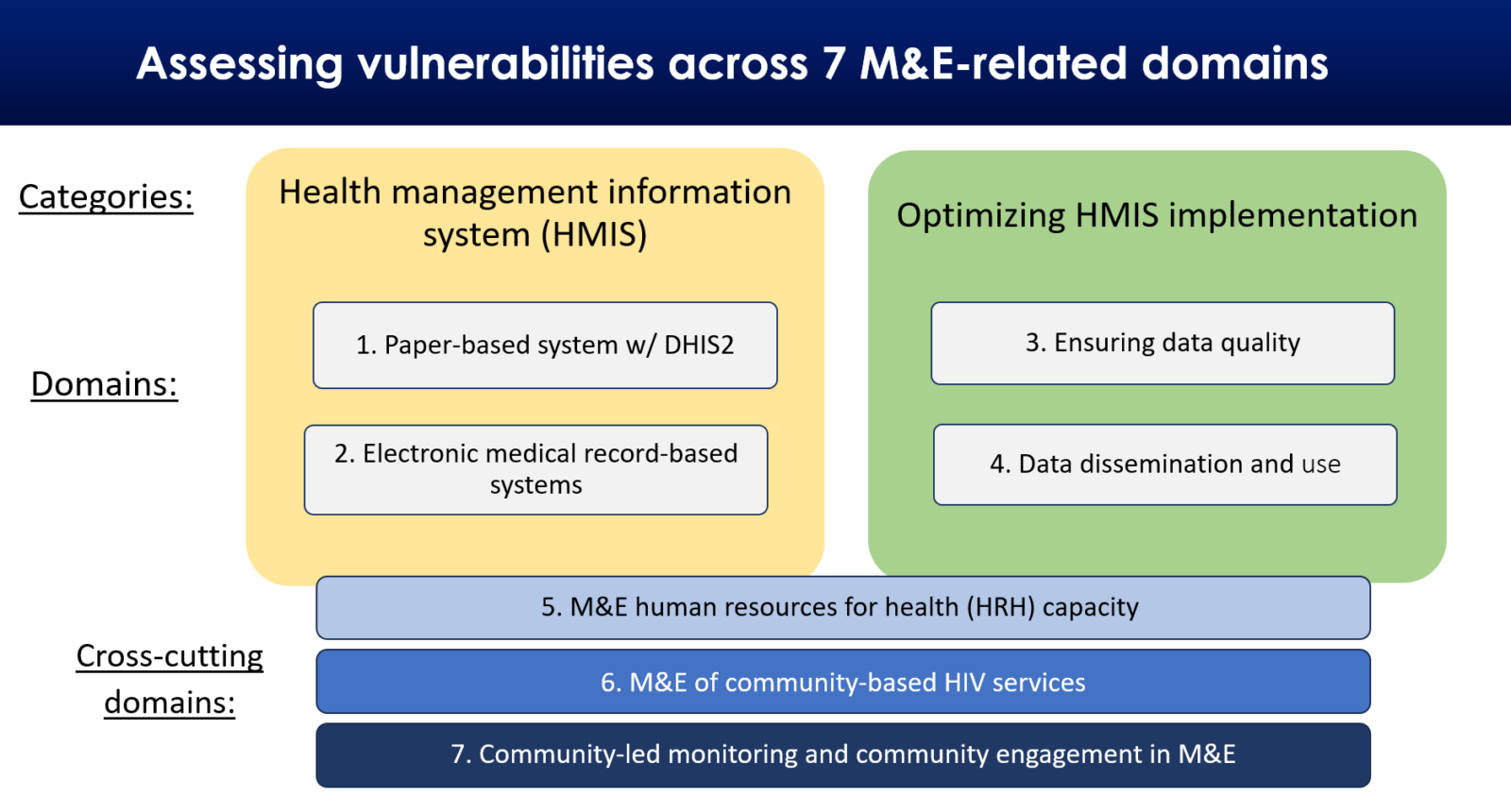
Country teams are currently piloting the tool through a series of exercises. These pilots will inform refinement of the tool to reflect country priorities and real-world M&E systems.
CQUIN began developing the tool in mid-2025 in response to country demand and feedback during HIV program reprioritization.
“The tool assesses key components of national M&E systems across several domains, including data systems, data quality, and human resources,” said Violet Oramisi, MBChB, CQUIN regional strategic information advisor. “These domains reflect input from Ministry of Health colleagues on how to strengthen country ownership while maintaining resilient data monitoring systems. For example, colleagues from Zambia’s Ministry of Health recommended adding a specific focus on monitoring community-based HIV services.”
“At the national level in Mozambique MOH, many M&E staff and human resources are U.S. government-supported,” said Orin Tiberi, Mozambique’s M&E lead, noting a potential gap in Mozambique’s M&E system that was revealed by using the tool.
“When we’re able to identify which areas are vulnerable, the tool will help countries determine and allocate resources to specific areas,” said Chimuka Sianyinda, M&E lead for Zambia.
The pilot results and the updated tool will be shared at the upcoming April 2026 CQUIN technical meeting.