

 Uganda
Uganda joined the CQUIN learning network in 2017 and has been an active member since. Uganda has participated in and hosted several country-to-country visits, sharing its best practices in community-based DSD and the flow of data from community to facility levels with multiple CQUIN partner countries.
As of 2024, UNAIDS estimates that Uganda has 79,000 [71,000-92,000] adults and children living with HIV, and an HIV prevalence of 0.9% in adults aged 15-49 [1.0% in women and 0.6% in men]. An estimated 94% of people know their HIV status, 93% of people who know their status are on treatment, and 87% of those on treatment are virally suppressed.
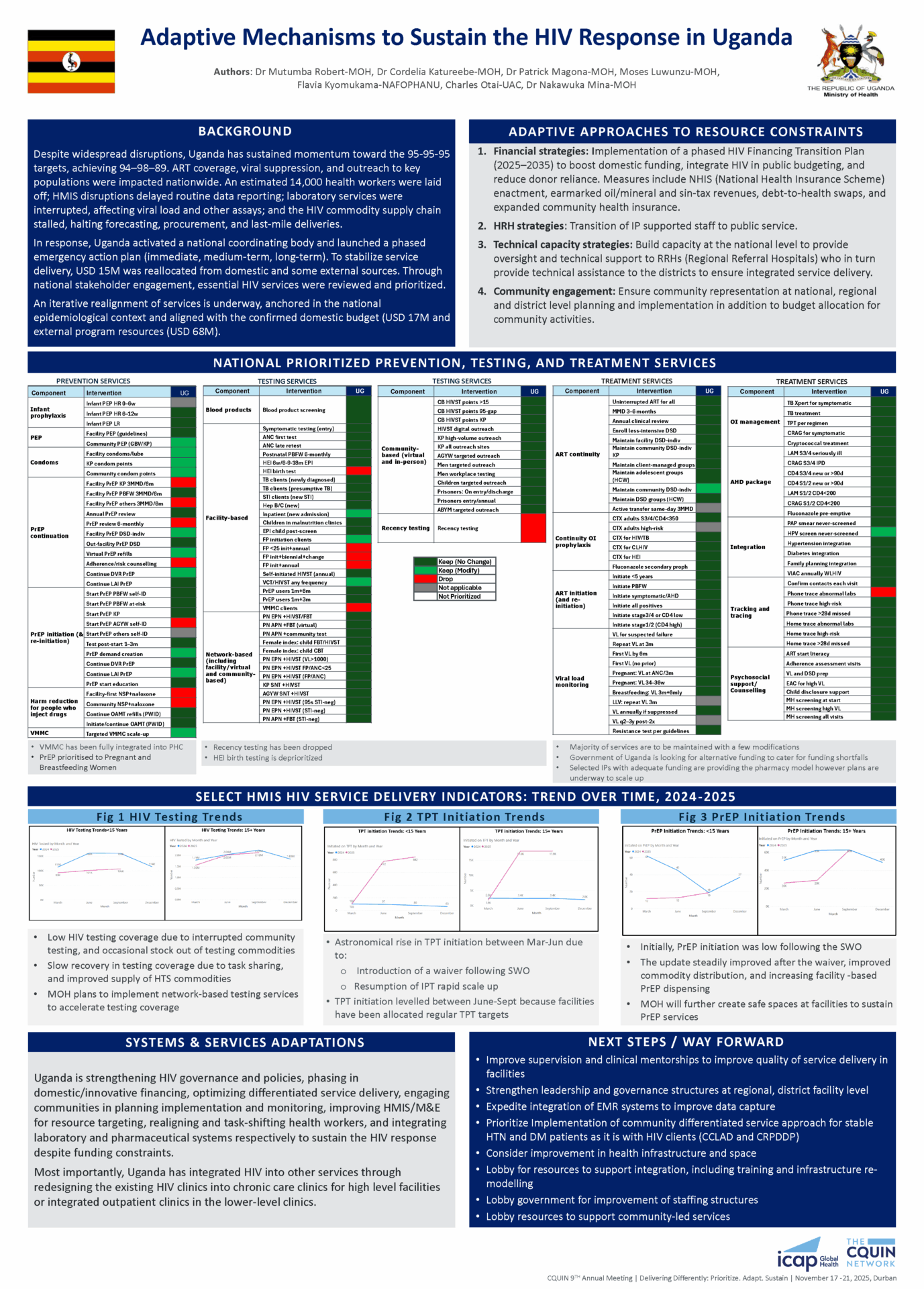
In 2025, Uganda participated in CQUIN-supported HIV service prioritization assessments to support the sustainability of HIV programs amid a changing global funding landscape.
The resources on this page reflect the most recent updates.
Resources
Taking Differentiated Service Delivery to Scale in Uganda
Uganda National Guidelines for HIV Care and Treatment
Learn more about ICAP’s broader portfolio of work in Uganda

Visit ICAP's Website for a broader portfolio of work in CQUIN network countries.