


Burundi’s Ministry of Health (MOH) is rolling out a standardized package of advanced HIV disease (AHD) services across 30 health facilities as part of an initial implementation phase launched in July 2026. The rollout marks the culmination of nearly two years of work to translate a national strategy into practice and will generate evidence to guide national scale-up. Despite major advances in HIV treatment, AHD remains a leading contributor to AIDS-related deaths globally, making early identification and management critical to reducing HIV-related mortality.
Assessment Finds High AHD Prevalence at Selected Facilities in Burundi
Between July and September 2024, the Burundi MOH selected 20 health facilities and conducted a national assessment to determine the prevalence of AHD among people newly diagnosed with HIV, returning to care after treatment interruption, or with an unsuppressed viral load.
The results revealed a significant AHD prevalence. Of the 492 people assessed, 49% (243) had AHD. The prevalence was highest among people returning to care after treatment interruption, where nearly two-thirds (64%) had AHD, compared with 52% of those newly initiating antiretroviral therapy and 41% of those with an unsuppressed viral load.
The magnitude of AHD surprised MOH leaders; they had not expected nearly half of those assessed to have AHD.
“We quickly realized that AHD was a much bigger challenge than we had anticipated,” said Dr. Saidi Karemangingo, Burundi’s differentiated service delivery coordinator at the MOH. “It became clear that we needed a more systematic approach to identify recipients of care with AHD early and ensure they received the appropriate care.”
CQUIN’s Country-to-Country Learning Exchange Model
Looking for practical examples of how to implement a stronger AHD program, Burundi turned to CQUIN’s country-to-country exchange learning model. CQUIN facilitates country-to-country learning exchanges so countries in the network can learn directly from peers, identify relevant practices and approaches, and adapt lessons to their own contexts. After these visits, participating countries develop action plans, share lessons with national stakeholders, and continue tracking progress. For Burundi, the exchange also built on other CQUIN-supported learning, including using the CQUIN-developed AHD capability maturity model to assess the country’s AHD program, technical meetings and webinars, and access to tools and resources developed by other countries in the network.
-

Visiting delegation at the central public health laboratory in Kampala during 2024 visit
-
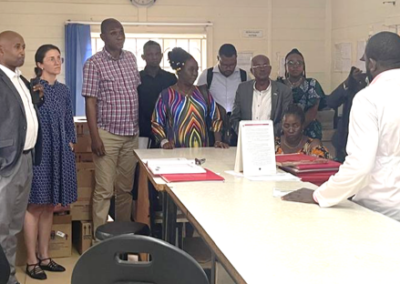
Learning session at Kiswa Health Center, Kampala
-
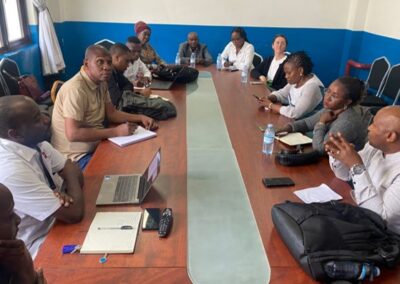
Feedback session in progress at MOH following field visits to facilities in Kampala
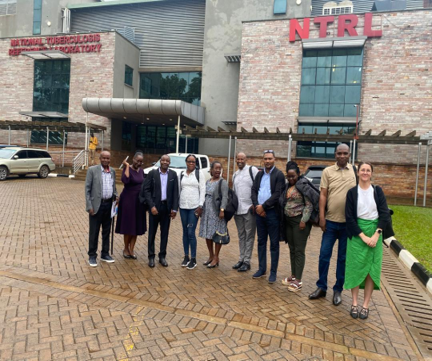
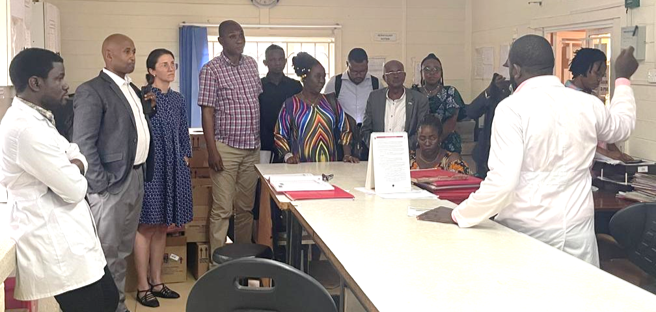

In November 2024, CQUIN facilitated a country exchange to Uganda, where the Burundi MOH learned from one of the region’s more established AHD programs. The exchange helped Burundi identify several innovations and best practices for adaptation, including developing a national AHD implementation roadmap, strengthening partnerships with community organizations, adapting Uganda’s hub-and-spoke model of AHD service delivery, strengthening access to commodities for AHD screening and opportunistic infection diagnosis and management, and developing resources to monitor AHD implementation.
“The visit marked a turning point for our team. It helped us move from knowing what needed to change to understanding how to make those changes a reality. We weren’t seeking to replicate Uganda’s model—we wanted to learn from the principles behind its success and apply them in ways that fit Burundi’s unique context,” Dr. Karemangingo said.
Burundi Turns Lessons into Action
Following the November 2024 exchange, Burundi began adapting the lessons from Uganda to its own AHD program.
In 2025, Burundi’s National AIDS Control Program used the 2024 assessment findings to advocate for CD4 testing supplies, and the Global Fund agreed to provide a limited quantity.
In early 2026, the MOH convened a technical working group and developed standard operating procedures, training materials, and monitoring and evaluation tools. The MOH finalized and approved the documents in March, and in April incorporated AHD into Burundi’s national HIV prevention, testing, and treatment guidelines
Following months of preparation, Burundi began implementation in July 2026. The program will now support the 30 participating facilities (the initial 20 that participated in the 2024 assessment, plus 10 new sites) through ongoing mentorship and supervision.
“The value of a country exchange is in creating opportunities to learn, innovate, and adapt successful approaches to local realities,” said Dr. Rachel Mudekereza, CQUIN’s regional clinical advisor for West and Central Africa. “Burundi’s journey demonstrates how lessons learned and best practices from peers can be contextualized to strengthen national systems and inform the development of a sustainable, person-centered package of care.”
This initial implementation phase in Burundi will generate critical evidence on AHD program feasibility, quality, and outcomes, informing decisions for the national scale‑up. As implementation progresses, Burundi will continue engaging with CQUIN to refine its approach and strengthen AHD care across the country.


