Against the backdrop of a rapidly changing funding landscape, CQUIN convened a three-day meeting for over 200 participants from the 21-country network. The meeting focused on understanding member countries’ emergency responses to the abrupt funding withdrawal, aiming to maintain service continuity across national HIV programs while laying the groundwork for resilient and sustainable HIV programming.
From June 10 – 12, 2025, representatives from 21 African ministries of health, national networks of people living with HIV, donors, implementing partners, civil society, and other key stakeholders met in Johannesburg, South Africa, under the theme: “Meeting the Moment: Transforming the HIV Response in a Time of Change”.
“There have been sudden, profound changes in the past few months with major implications for recipients of care – both adults and children – and HIV programming overall,” said Wafaa El-Sadr, MD, MPH, MPA, ICAP’s global director. “This moment compels us to come together and think carefully about how to preserve the gains and keep momentum in HIV care.”
From Emergency Response to Long-Term Sustainability
During the three-day meeting, country delegations reported progress made by their countries in addressing the consequences of abrupt funding withdrawals. The country delegations showcased the early phase of their HIV emergency response plans, focusing on practical adaptations made to sustain services despite system strain, staffing challenges, and disrupted programming. Throughout the meeting, participants refined their national HIV service priorities, exchanged insights, and laid the foundation for longer-term sustainability.
In scenario-based planning sessions, the ICAP-CQUIN technical team asked country teams to define a minimum package of care they could realistically deliver within different funding levels. This framework enabled participants to anticipate future shocks, recalibrate services, and design proactive strategies that maintain coverage and continuity.
“As a network, we need to explore multiple future possibilities, anticipate challenges we are likely to face in the coming months, and seize the emerging opportunities and craft very proactive strategies,” said Maureen Syowai, MBChB, MSc, CQUIN’s interim project director, during the opening keynote address.
Fostering Knowledge Exchange
The meeting also facilitated cross-country learning through paired multi-country sessions and single-country breakout sessions. Participants applied the knowledge gained from the various meeting sessions to develop their action plans for the remainder of the year. “It has dawned on me that by end of September, the external funding for our programs is likely to come down to 70% or even 30%, and in the next two to three years we might get to 0% support,” said Tsitsi Apollo, DPhil, deputy director HIV/AIDS and STIs, Ministry of Health and Child Care in Zimbabwe. “This means we must quickly and urgently redesign our programs to sustain the gains and provide quality services. There’s a need for support from our leadership and quick resource mobilization for alternative sources of funding to make sure that we continue to provide services.”
During CQUIN’s innovative “Tools Lab”, a vibrant resource-sharing marketplace, meeting participants and attendees showcased some of their HIV service delivery tools used in their respective countries. In line with the keynote presentation that highlighted the importance of strategic scenario planning, the International AIDS Society (IAS) presented the PATH – Planning and Action Toolbox for HIV Sustainability. This is a rapidly deployable compendium of resources for national governments to support responding to unexpected reductions in HIV funding by enabling swift reassessment and reorganization of HIV systems and services. “The tool had three scenarios. 0%, 30% and 70%. At home, we are discussing the same scenarios. Still, we don’t have the disaggregation of how we would operate in the scenarios with specifics such as viral loads, treatment, etc.,” said Irénio Gaspar, MD, care and treatment lead in the Ministry of Health, Mozambique. “This was the most impressive tool that I saw. I will take it back home and continue with it because it is simply amazing.”
Several participants reflected on the benefits of CQUIN activities to countries in the network.
“We are here to have a timely discussion about how we can mitigate our HIV response, and it has been very insightful to hear from other countries and share experiences on how they are mitigating with minimal grants on hand. For us, all these real-life examples have been very instrumental in helping us see and think about how we can also optimize our own HIV response at the country level,” said Joseph Fokam, PhD, PGDF, permanent secretary, National AIDS Control Committee, Cameroon.
-
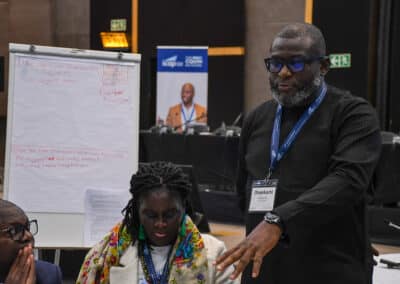
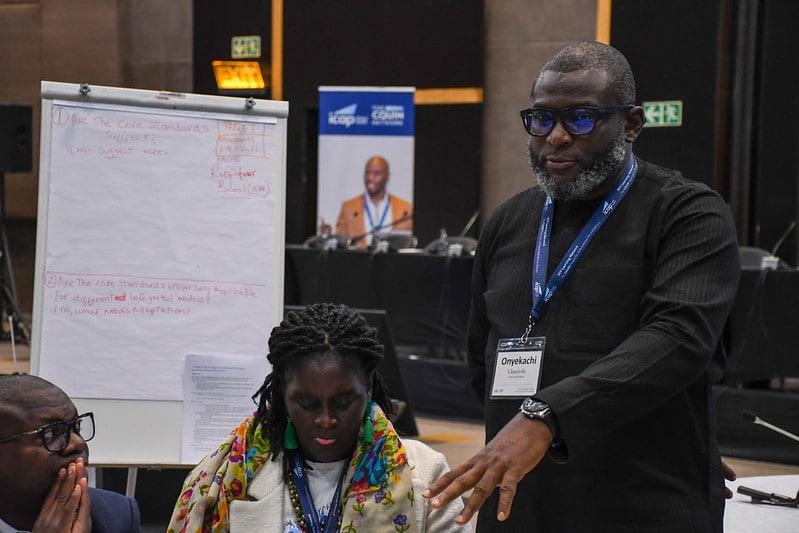
CQUIN's Regional Clinical and Quality Improvement Advisor, Onyekachi Ukaejiofo (right), captured with Wokie Cole from LIBNET+, Liberia
-
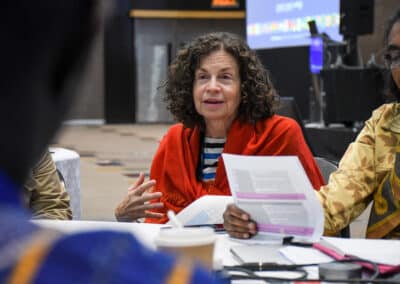
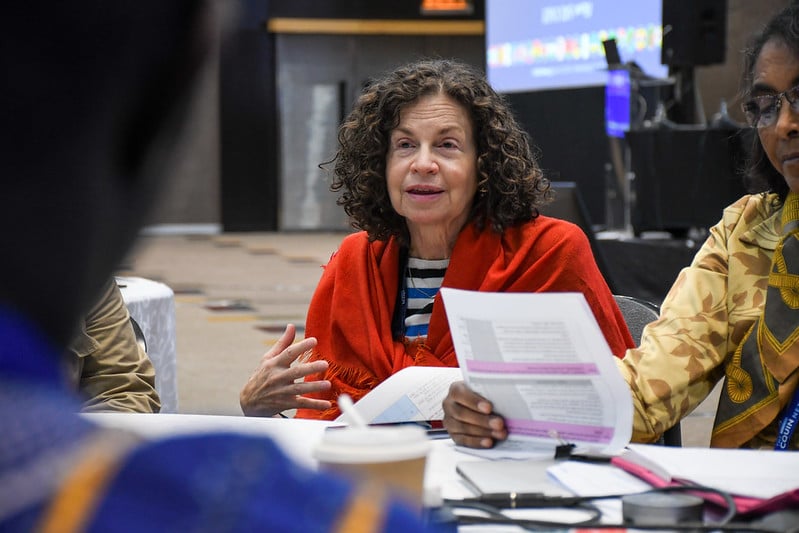
Jessica Justman, CQUIN Principal Investigator in a session
-
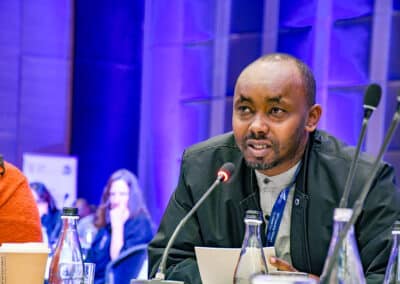
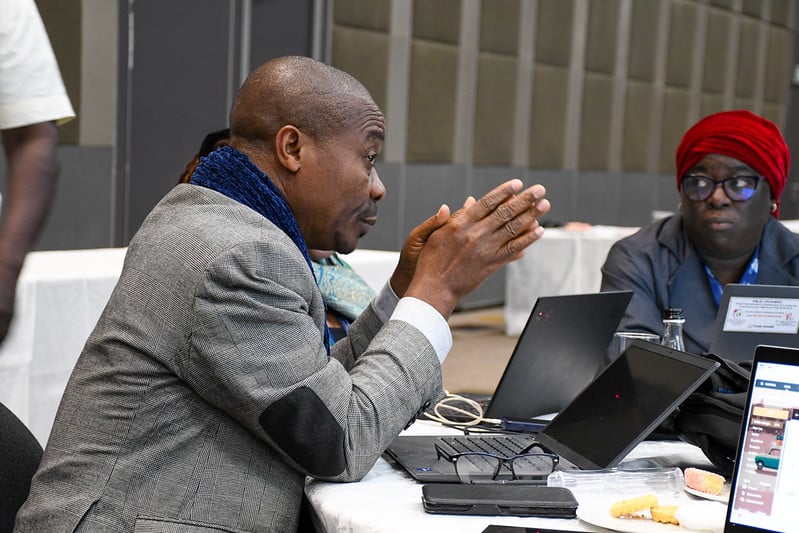
Deo Mutambuka, RIP+ Rwanda in a session
-

Joseph Fokam, Permanent Secretary, Cameroon, in a country action planning session
-
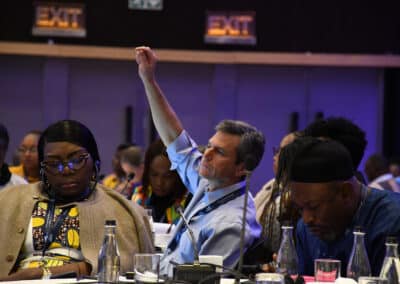
Peter Ehrenkranz, Gates Foundation raising his hand to ask a question in one of the sessions
-

Mathurin Kouadjale, MOH Cote d'Ivoire in a country planning session


“This meeting comes at a crucial time for people to share experiences, provide learning opportunities, and best practices,” said Deo Mutambuka, executive director of the Rwanda Network of People Living with HIV, RRP+.
Countries were encouraged to work on their updated action plans in July 2025 to foster long-term planning. CQUIN leadership hopes the lessons from the meeting will continue to shape national strategies, balancing urgency with long-term vision. Teams will implement key adaptations throughout the remainder of the year, reporting progress at CQUIN’s annual meeting in November.