Recent global HIV program disruptions have disproportionately affected many people living with HIV who are at higher risk of HIV than the general population. These key populations include sex workers, people who inject drugs, and men who have sex with men, among others. According to UNAIDS’ 2025 Global AIDS Update, many countries are scaling back community-based services for key populations as these services have mostly been donor-funded. As a result, country programs, including countries in the CQUIN network, are rapidly integrating care for key populations into public health facilities.
To support this shift and promote quality and effective care for key populations, CQUIN has developed a Key Population-Friendly Services Quality Management Toolkit. This comprehensive assessment toolkit is designed to address all barriers that key populations may face in accessing care, including denial of services, privacy violations, mistreatment by non-clinical staff, and lack of redress processes.
“We began developing this tool before the threats to donor-dependent key population services emerged in 2025,” said Cassia Wells, MD, MPH, ICAP-CQUIN’s senior technical advisor for key populations. “We did this because we felt it was important for long-term sustainability and epidemic control that key populations feel comfortable accessing health services in the public sector.”
CQUIN’s Key Population and Quality Management Communities of Practice (CoPs) began developing the toolkit at the end of 2023, with technical expertise from CQUIN leadership, including Maureen Syowai, MBChB, MSc, program director, and William Reidy, PhD, MPH, deputy director of Strategic Information. A pilot-ready version was available at the end of 2024. However, after the service disruptions at the beginning of 2025, some adjustments were made to the toolkit’s content to reflect the moment. CQUIN also sought feedback from a wide range of country stakeholders, including from Senegal and Uganda, who piloted the tool between May and July 2025, providing valuable insights that helped refine the kit’s effectiveness before its final release in September.
“Piloting the Key Population-Friendly Services Quality Management Toolkit gave us a sense of ownership over the process. We’ve gained valuable insights that will help strengthen equity in HIV service delivery – across both prevention and treatment – for the entire population,” said Abdou Khoudia Diop, MD, head, Key Population Care at the Senegal’s National Reference Center.
“Participating in the pilot of the CQUIN Key Population-Friendly Services Quality Management Toolkit was crucial for us. The feedback we provided to help modify the tool’s use will help enhance service delivery and ensure that our most vulnerable populations have access to safe and respectful care,” said Mina Nakawuka, MBChB, MPH, program officer for Care and Treatment at the Uganda Ministry of Health.
“Programs can use this assessment tool at health facilities to identify gaps, develop targeted interventions to address challenges, and monitor improvements in service quality over time,” said Gillian Dougherty, MPH, BSN, ICAP’s quality improvement advisor and CQUIN Quality Management CoP lead, who co-developed the tool. “We also believe this tool can serve as a resource for key population community groups by providing detailed rights-based quality standards that communities can advocate for.”
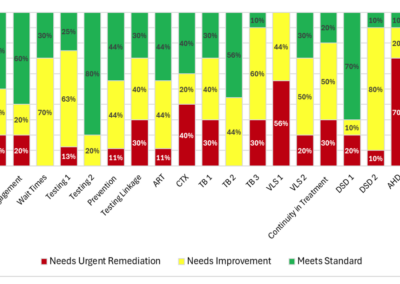
The toolkit is divided into two parts. The first part describes the quality of care for key populations in health facility settings by defining 26 quality standard statements. These standards cover equity, accessibility, acceptability, appropriateness, effectiveness, and accountability, all with the aim of helping programs deliver HIV services that are not only clinically sound but also respectful, safe, and responsive to the unique needs of key populations. The second part offers a practical way to assess whether health facilities meet these standards through a structured quality assessment tool. This tool consists of 50 indicators for health facilities to determine their quality scores and identify areas for improvement. “This document will be especially useful now, as countries integrate key population services into general health facilities to strengthen long-term continuity of care,” said Jeffrey Walimbwa, program manager at Ishtar MSM, a Kenyan community-based organization that supports gay, bisexual, and other men who have sex with men. “The tool will also be useful in assessing provider attitudes, which have been a huge barrier for key population service uptake.”
Kenya’s Ministry of Health, recognizing the urgency of making its health facilities more key population-friendly, plans to use the new CQUIN tool to assess its services and will implement the assessment in four counties to inform scale-up.
“It is important to note that countries will need to adapt the tool to their context and should include local key population communities in every step of the process,” said Dr. Wells. “By systematically implementing these standards, HIV programs can build trust with key populations, improve service uptake, and sustain progress toward epidemic control.”
The tool, which is in English and French, is now available for use and can be downloaded from the CQUIN website. CQUIN leadership welcomes all feedback on the material and is willing to provide technical assistance to member countries that are interested in using the tool.